Devin Booker – Official NBA Profile
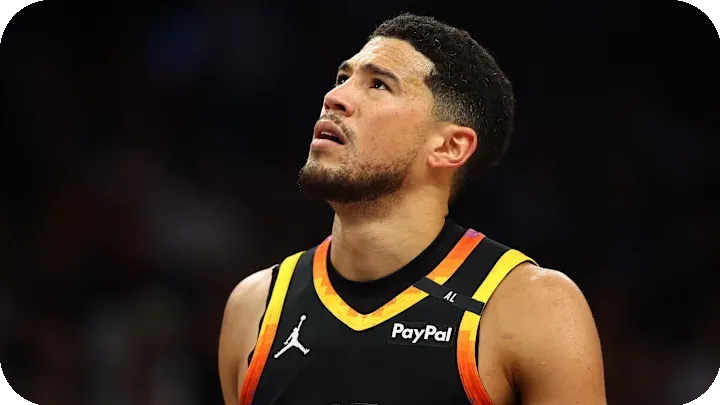
Few young NBA stars have blended natural scoring ability with relentless work ethic quite like Devin Armani Booker. Revered for his silky shooting stroke, late-game fearlessness, and rapidly expanding playmaking repertoire, Booker has already crafted a résumé that belies his age. Yet to understand why the Phoenix Suns guard moves with the composure of a seasoned veteran, you have to trace his story back to a childhood split between the snowy streets of Grand Rapids, Michigan, and the humid gyms of coastal Mississippi. From driveway duels with his father—an overseas pro still chasing the NBA dream—to national TV cameos as a 19-year-old rookie draining clutch buckets, Booker’s journey is equal parts family saga, collegiate apprenticeship, and meteoric professional rise. The narrative that follows dives into each formative chapter, highlighting the moments, mentors, and milestones that shaped a quiet kid into one of basketball’s most compelling offensive engines.
Early Life and Background
Childhood and Family
Devin Booker was born on October 30, 1996, in Grand Rapids, Michigan, to Melvin Booker and Veronica Gutiérrez. His father, Melvin, was a standout point guard at the University of Missouri who briefly reached the NBA before carving out a lengthy career in Europe. Those seasons overseas meant long stretches when young Devin communicated with his dad through grainy video calls and summer visits. Even from afar, Melvin’s influence loomed large. He mailed VHS tapes of his EuroLeague games, quizzed Devin on defensive rotations, and emphasized the mantra that fundamentals always outlast flash.
Veronica, a Mexican-American from Michigan with a background in cosmetology, provided stability at home and balance in perspective. She encouraged Devin’s curiosity beyond basketball, enrolling him in honors courses and insisting on community involvement. Friends recall her driving him to pre-dawn practices, then reminding him on the way home that straight A’s mattered as much as straight-on jumpers. The cultural duality—African-American athletic lineage on one side, Latino heritage and Midwestern pragmatism on the other—gave Booker a grounded self-confidence that would later help him navigate NBA spotlights with calm maturity.
A pivotal decision came before Devin’s sophomore year of high school. Recognizing both his son’s potential and the distractions of a cold-weather city with limited basketball exposure, Melvin persuaded Veronica to let Devin move south to Moss Point, Mississippi, where Melvin had been hired as an assistant coach. The transition was jarring: fewer than ten thousand residents, sweltering summers, and a gym that sometimes leaked during thunderstorms. Yet the smaller stage amplified Booker’s responsibilities. He led Moss Point High in scoring as a 15-year-old and soon attracted caravans of college recruiters to tiny Jackson County gyms. Off the court, Devin embraced Southern hospitality—fishing on the Pascagoula River, volunteering at youth camps, and befriending teammates whose families hosted him for Sunday dinners. Those relationships, forged far from national scouting services, instilled empathy and loyalty traits that teammates now cite as hallmarks of Booker’s leadership style.
College Career at Kentucky
By the time Booker committed to the University of Kentucky in the fall of 2013, he was a consensus five-star prospect, but hardly the headliner of John Calipari’s latest super-class. Future NBA lottery picks Karl-Anthony Towns, Willie Cauley-Stein, Trey Lyles, and the Harrison twins dominated preseason headlines. Booker accepted a sixth-man role, embracing Calipari’s “platoon” system that showcased relentless depth over individual stats. The adjustment tested his patience: instead of the 30-shot nights he’d enjoyed in high school, he averaged just 21.5 minutes and 8.7 attempts per game.
What he maximized, however, were those touches. Booker shot 41.1 % from beyond the arc, punished defenders with textbook footwork off pindowns, and flashed a crafty floater that foreshadowed his now-signature midrange game. His maturity off the bench earned him SEC Sixth Man of the Year honors and the trust of Calipari, who frequently closed tight contests with Booker on the floor despite his reserve label.

Beyond numbers, the Kentucky crucible taught Booker to find rhythm without guaranteed volume—a skill vital to NBA success alongside high-usage stars. Practices pitted him daily against NBA-caliber athletes; film sessions dissected nuances like screen angles and weak-side positioning. In the classroom he pursued communications coursework, mindful of a dream to someday operate production companies that spotlight under-represented voices. That balance of sport and scholarship mirrored his mother’s earlier lessons and would later inform his philanthropic initiatives in Phoenix.
Kentucky’s 2014-15 squad started 38-0 before falling to Wisconsin in the Final Four—a heartbreak that doubled as Booker’s introduction to national scrutiny. He scored only three points that night, then faced a locker-room swarm of reporters asking if the Wildcats’ perfect season had been “a waste.” Booker answered with poise, crediting Wisconsin’s senior leadership and vowing to learn from defeat. NBA executives took note; weeks later, his draft stock soared thanks to interviews that revealed emotional intelligence as polished as his shooting mechanics.
NBA Draft and Career Beginnings

2015 Draft and Rookie Season
Leading into the 2015 NBA Draft, Devin Booker intrigued scouts as the youngest prospect on the board—still 18 on workout circuits—yet possessed of an “old-man game.” Private sessions with the Phoenix Suns emphasized decision-making: pick-and-roll reads, skip-passes off a live dribble, and defensive slide drills that showcased underrated lateral quickness. Phoenix, attracted by his combination of upside and polish, selected Booker with the 13th overall pick.
Arriving in the desert presented both opportunity and challenge. The Suns’ backcourt already featured Eric Bledsoe and Brandon Knight, limiting early minutes. Booker responded by treating each cameo as an audition. Mid-January injuries forced head coach Jeff Hornacek to expand his role, and Booker delivered: a 17-game stretch where he averaged 17.4 points on 46 % shooting, including multiple fourth-quarter flurries that electrified Talking Stick Resort Arena. Teammates praised his film-study habits—often the first in the practice facility, dissecting angles with veteran assistant Earl Watson.
Statistically, Booker finished his rookie year averaging 13.8 points, 2.6 assists, and 2.5 rebounds across 76 appearances, earning a nod to the NBA All-Rookie First Team. More telling than the numbers was his command of nuance: subtle relocation after passes, deceptive shot fakes inherited from studying Kobe Bryant, and a nuanced understanding of pacing rarely seen in teenagers. The groundwork for stardom had been laid.
Early Breakthrough with Phoenix Suns
Booker’s sophomore campaign featured signature moments that fast-tracked his national profile. Most iconic was March 24, 2017, in Boston, when a 20-year-old Booker scorched the Celtics for 70 points—becoming the youngest player ever to reach that plateau and just the sixth player in league history to score 70 or more. Unlike other volcanic scoring nights fueled by selfish isolation, Booker’s performance blended efficiency (24-of-26 at the line, 21-of-40 from the field) with sustained competitive fire despite Phoenix trailing much of the night. Hall-of-Famers tweeted accolades; opponents sought autographed sneakers postgame.
The achievement underscored two critical truths. First, Booker could weaponize his shot variety—step-back threes, elbow pull-ups, reverse layups—against elite defenders. Second, he possessed the stamina and mental toughness to shoulder heavy usage without compromising shot quality. Those attributes became pillars for Phoenix’s rebuild. Even as the team cycled through coaches and lotteries, Booker improved yearly, adding advanced pick-and-roll reads, stronger finishes through contact, and commitment to offseason strength programs that packed 15 pounds of muscle onto his 6’5″ frame.
Off the court, he embraced franchise-cornerstone responsibilities. Booker launched the “Starting Five” initiative, pledging $2.5 million to Phoenix nonprofits over five years, inspired by lessons from Moss Point about community uplift. He also became an ambassador for Special Olympics Arizona, influenced by his younger sister Mya, who has microdeletion syndrome. Those endeavors endeared him to the Valley community and illustrated leadership beyond stat sheets.
By the summer of 2018, Phoenix rewarded Booker with a five-year, $158 million maximum contract extension, a testament to both performance and potential. Pundits questioned whether the Suns could surround him with sufficient talent; Booker focused on controllables—expanding his handle, honing footwork through offseason sessions with trainers like Chris Brickley, and studying film of James Harden’s foul-drawing craft. The arrival of mentor Chris Paul in 2020 catalyzed a leap from individual brilliance to playoff validation, culminating in Booker’s first NBA Finals appearance in 2021. Though this chapter edges beyond “career beginnings,” it echoes that original blueprint: a child absorbing lessons from a globetrotting father, a teenager thriving in a tiny Mississippi gym, and a rookie seizing unexpected minutes with uncanny poise.
Playing Style and Position
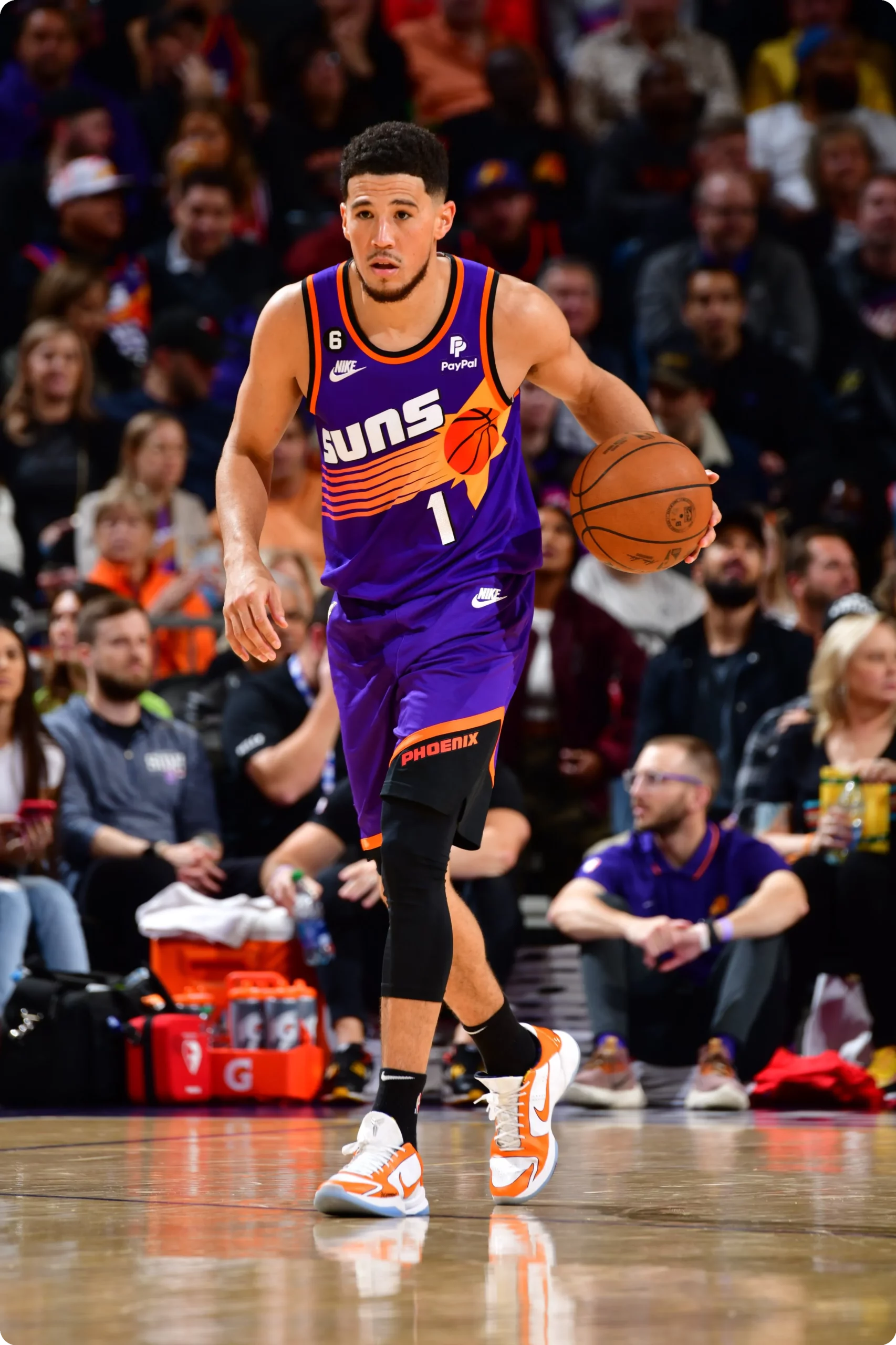
At first glance, Devin Booker’s game looks like the classic scoring two-guard blueprint—effortless jumper, economical dribble package, quick-release three. Dig a little deeper and you find a far more modern, shape-shifting profile. Since Monty Williams handed him part-time on-ball duties in 2019, Booker has toggled seamlessly between primary scorer and half-court organizer, reading coverages in real time and dictating tempo with Chris-Paul-level patience. In 2024-25 he logged 7.1 assists per night—11th-best in the league—while still pouring in 25.6 points on a 58.8 true-shooting percentage. That dual threat forces defenses to pick a poison: blitz him and he hits the roller or weak-side shooter; play drop and he snakes into his beloved mid-range.
Shooting Guard Role
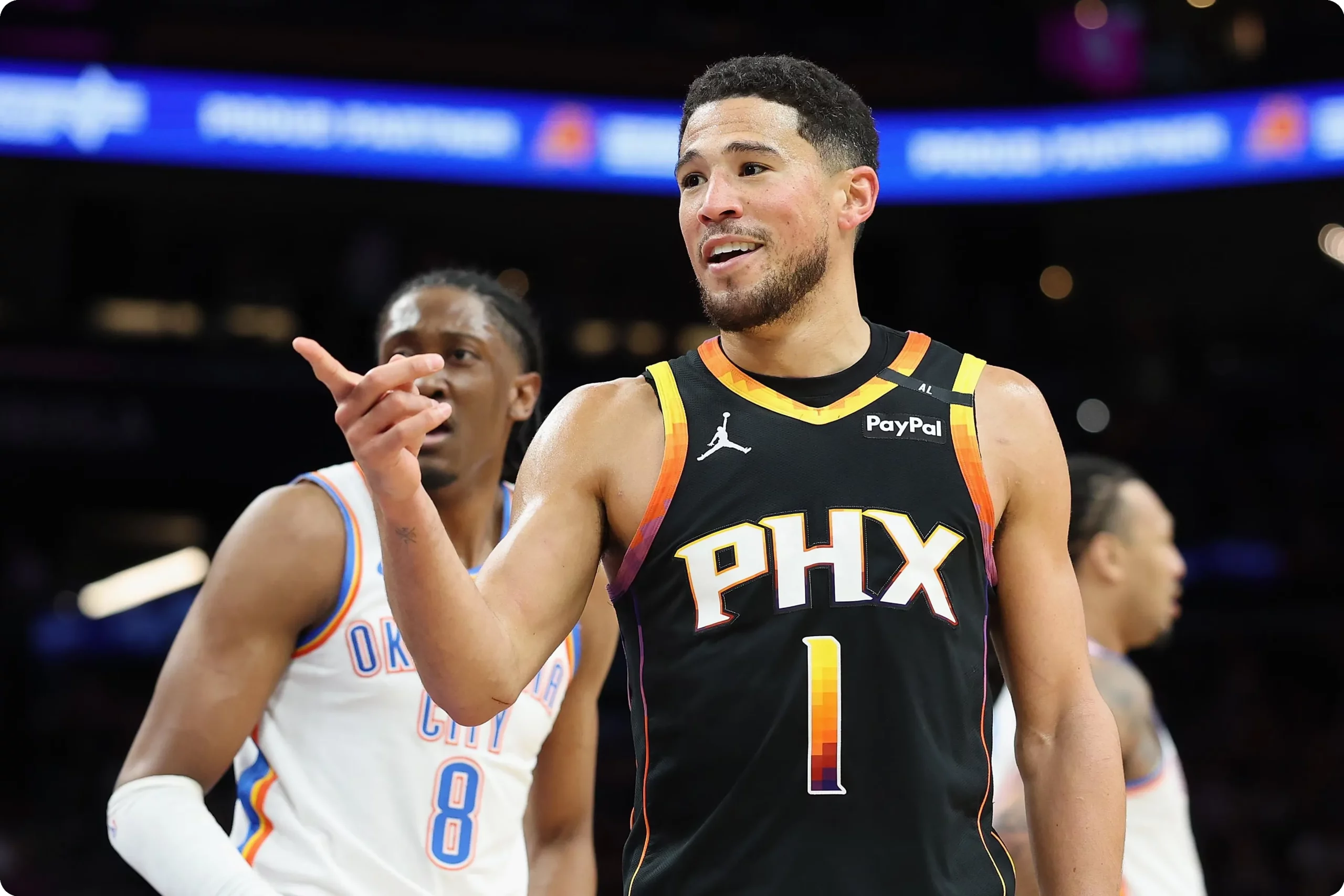
Booker is officially listed as a shooting guard, yet Phoenix’s offense treats him as a “flat” creator whose position flexes with matchup context. When Bradley Beal handles the initial action, Booker relocates like an old-school off-screen marksman, sprinting off “Iverson” cuts or curling around a stagger into instant pull-ups. When Kevin Durant rests, Booker slides to lead-guard responsibilities—calling horns sets, manipulating bigs with drag screens, and toggling his pace from walk-up orchestration to 0-to-60 bursts. Coaches love that shape-shifting: in 2024-25, 39 percent of his made threes were classified by Second Spectrum as “self-created,” while 61 percent were assisted, proof that he can finish plays and initiate them. The result is a usage profile that mirrors the league’s best combo guards without sacrificing efficiency—his 46.1-percent field-goal clip on nearly 19 attempts per night ranked in the 73rd percentile among high-volume guards.
Strengths – Shooting, Mid-range, Clutch Moments
Three-Level Shot-Making. Booker’s mechanics are textbook: minimal dip, balanced base, soft follow-through. Since adding a deeper step-back in 2022, he comfortably launches above contests; even with volume climbing, he still canned 33.2 percent of seven pull-up threes a game this past season. Off the catch, he’s even deadlier—Synergy graded him in the 89th percentile on spot-ups, often sprinting from the weak-side corner and squaring mid-air à la Ray Allen.
Mid-Range Mastery. Where some analytics disciples abandon the in-between area, Booker weaponizes it. He shot 49 percent on 8.1 mid-range tries per game in 2023-24, numbers comparable to Kevin Durant’s peak levels. The footwork he honed at Kentucky—inside-out jab, subtle rocker step—lets him carve pockets against drop coverage. That mid-range gravity bends defenses: send help early and Phoenix gets corner threes; stay home and Booker walks into open 16-footers.
Clutch Gene. The “70-in-Boston” night from 2017 proved his volcanic ceiling, but his late-game résumé has only grown. Since 2021 he ranks top-five league-wide in clutch-time points, and in the 2024 postseason he averaged 9.7 points on 62 percent shooting in the final five minutes of one-possession games. Even in a first-round exit, he matched Luka Dončić shot for shot, dropping 42 in Game 4 while accounting for or assisting on 58 percent of Suns points. Teammates say his calm comes from relentless film study—Booker reportedly starts mornings with espresso and second-spectrum clips, logging tendencies into a hand-written notebook he keeps in his locker.

Weaknesses and Growth Areas
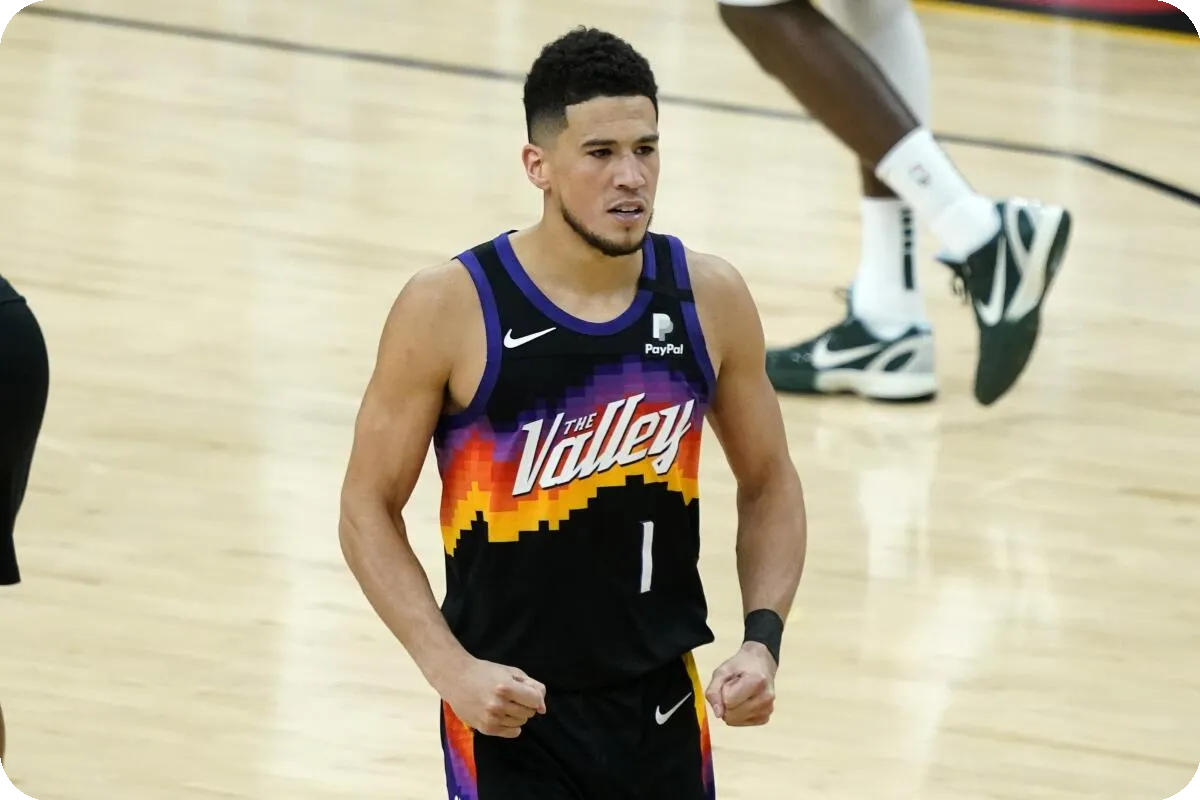
Point-of-Attack Defense. Booker’s biggest knock remains lateral containment. His defensive rating ballooned to 122.6 in 2024-25, bottom-tier among starters. Part of that is roster context—Phoenix often lacked a true stopper—but Booker’s upright stance and occasional ball-watching invite blow-bys. Coaches have tried hiding him on low-usage wings, yet deep-playoff opponents hunt those switches. The Suns staff believes incremental gains are realistic: he posted a career-best 108.8 DRTG in 2021-22 after a summer of hip-mobility drills, proof that focus plus scheme can elevate his floor.
Turnovers Under Traps. As a lead ball-handler, Booker still struggles against long-armed blitzes; his turnover percentage rose to 12.3 in double-team situations last season. Adding a snappy outlet decision and strengthening his left-hand live-dribble skip pass would unlock cleaner half-court possessions when opponents load up.
Durability. Minor hamstring and groin tweaks limited him to 68 games in 2023-24; Phoenix’s medical staff has since introduced offseason Pilates to fortify his posterior chain. If he can consistently top 73 games, he’ll enter every MVP conversation—voters penalized availability when he placed fourth in 2022.
Personal Life and Interests
Booker’s off-court persona is a study in understated cool. The son of a Mexican-American mother and former EuroLeague guard Melvin Booker, Devin keeps a vintage Canon AE-1 film camera in his backpack and shoots black-and-white portraits of team staffers during road trips—a hobby that landed him on GQ’s 2025 “Creative Athletes” list. He’s also a dedicated gamer, streaming Call of Duty and Apex titles on Twitch under the handle DBook, where his Warzone lobbies regularly pull 25K concurrent viewers. Classic cars round out the trifecta: his Paradise Valley garage houses a ’59 Chevy Impala nicknamed “Pretty Penny,” a Ferrari 488 Spider, and twin Buick Grand Nationals, an assemblage valued near $600 K.
Philanthropy and Community Work
In 2019 Booker launched the “Starting Five” initiative—a pledge to donate $500,000 annually to five youth-serving nonprofits across Arizona. The latest grant cycle (2023-24) funded two court renovations and three STEM learning labs in the Phoenix metro area. Booker remains hands-on, visiting sites unannounced and hosting pop-up clinics that pair Suns trainers with Special Olympics athletes. His Special Olympics Global Ambassador role, inspired by his sister Mya, who lives with microdeletion syndrome, focuses on inclusive hoops programming and social-media advocacy for disability rights.
Booker’s philanthropy also extends home to Moss Point, Mississippi. A 2025 collaboration with 2K Foundations resurfaced neighborhood courts with the motto “Be Legendary” stenciled at center court, mirroring the Kobe Bryant message he tattooed on his forearm. Local organizers credit Booker’s visibility with spurring a wave of alumni donations aimed at scholarships and hurricane-resilience projects in Jackson County.

Off-court Endorsements and Media Appearances
Nike Book 1. In 2024 Booker joined Nike’s signature family with the “Book 1,” marketed as a “future classic” blending lifestyle cues—canvas sidewalls, leather eyestays—with performance Zoom cushioning. The inaugural “Lightwork” colorway sold out in eight minutes on SNKRS, and 2025 saw regional drops like the “Valley” and “Moss Point” editions.
Video-Game Icon. Booker graced the NBA 2K23 standard cover, a childhood bucket-list item after he won the NBA-players-only 2K tournament during the 2020 bubble hiatus. Two years later Activision cast him in a live-action trailer for Call of Duty: Modern Warfare III, turning his gamer-tag into an in-game operator skin and adding Suns-inspired emblems to Warzone loadout.
Fashion and Media. From Prada wide-leg denim at Madison Square Garden to front-row seats during New York Fashion Week, Booker’s fits dominate GQ slideshows, earning him a spot among the magazine’s 2025 “Most Stylish Athletes”. He’s also partnered with luxury-retail platform FWRD—where former partner Kendall Jenner serves as creative director—on curated menswear capsules, proving he can mix business and personal lanes without tabloid overexposure.
Investments. Away from the camera flash Booker quietly backs ventures that mirror his passions: an $80 million Series C round for Overtime Sports’ digital-content expansion, a minority stake in e-sports organization 100 Thieves, and equity in tequila start-up Casa Nuevo, which donates a portion of profits to border-state youth arts programs.