
Devin Booker’s Teams and Career Journey
From the moment the Phoenix Suns called his name with the 13-th pick in 2015, Devin Booker’s path has traced a single, sun-drenched arc—yet within that line lie dozens of chapters: a teenager learning the NBA through defeat, a franchise cornerstone navigating super-team experiments, an Olympic gold-medalist adapting to FIBA quirks, and a cultural touchstone shaping how the modern two-guard is judged. What follows dives into those chapters, placing equal weight on hard numbers, locker-room anecdotes, and the broader ripple effects of Booker’s rise.
Phoenix Suns (2015 – Present)
Franchise Star and Team Leader
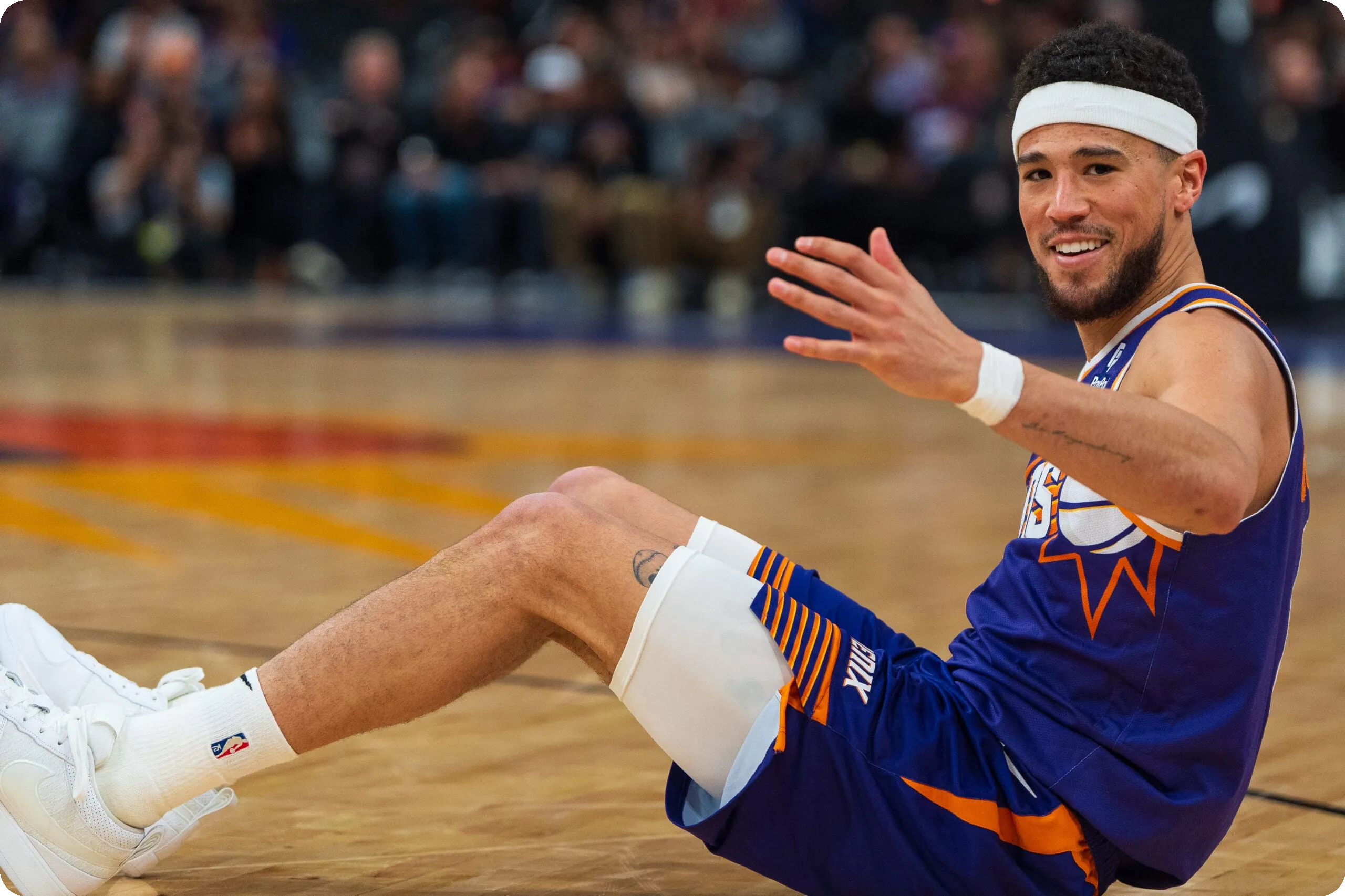
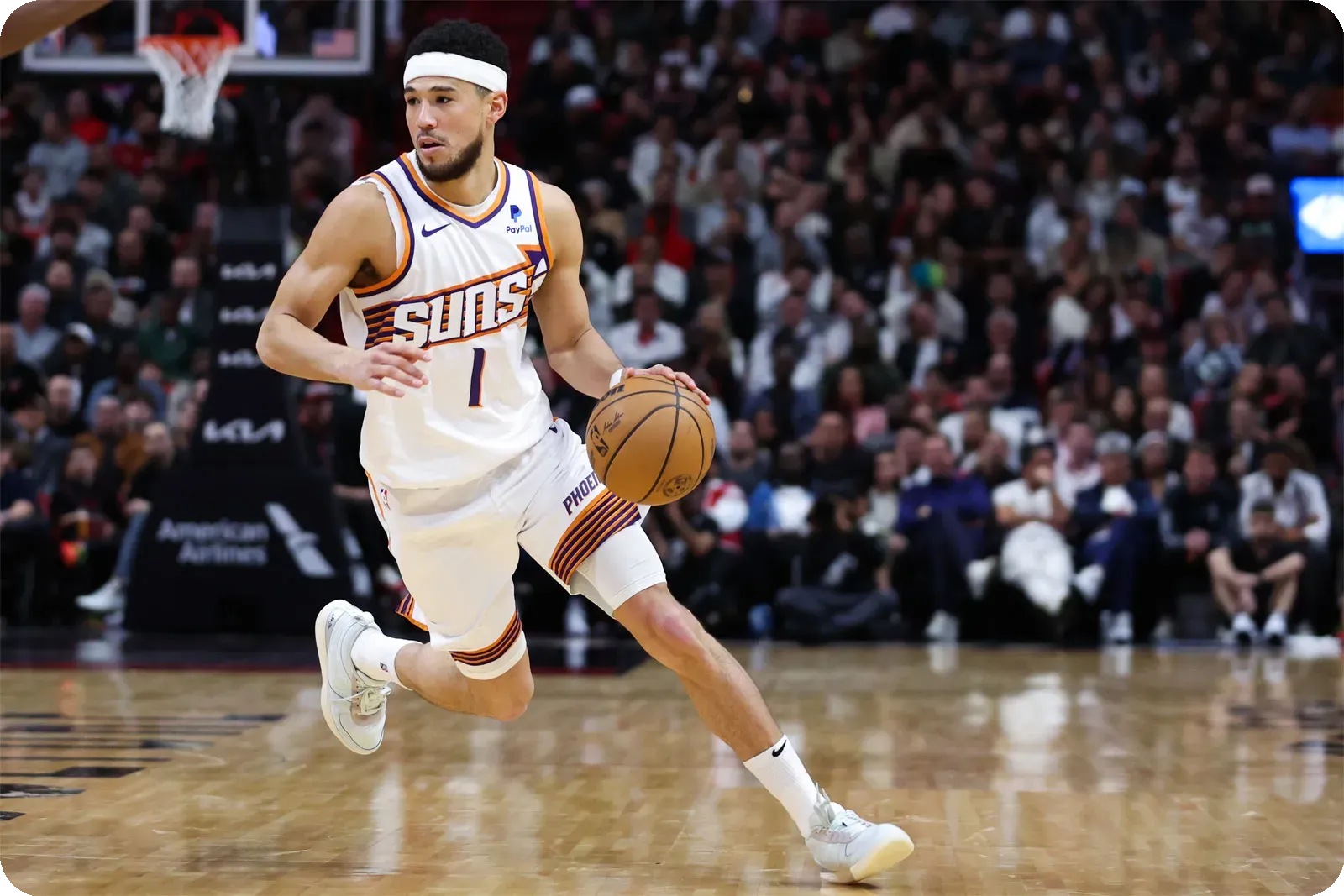
Booker’s tenth pro season ended with him atop almost every meaningful Phoenix record book: youngest Sun to 10 000 points, fastest to 1 000 threes, and—since February 12, 2025—the club’s all-time scoring king at 15 678 points, passing Walter Davis with a curling elbow jumper that stopped play for a three-minute standing ovation . His leadership résumé runs deeper than milestones. By 2024-25 he was shouldering 37.3 minutes, 25.6 points and a career-best 7.1 assists per game, tops on the roster in both usage and table-setting. That workload came despite roster turbulence—new head coach Mike Budenholzer, mid-season trades, and Bradley Beal’s shift between starting and sixth-man roles—but Booker’s nightly output stayed within two percentage points of his career true-shooting baseline, illustrating a floor most franchises treat as their ceiling.
Beyond box scores, teammates describe a day-to-day captain who blends “old-head habits” (first in film room, handwritten scouting notes) with generational awareness of social media, fashion and NIL culture. Chris Paul once joked that Booker “has a 2005 work ethic in a 2025 body”—a quip that hints at why veteran reinforcements gravitate toward Footprint Center each summer.
Synergy with Kevin Durant & Bradley Beal
When Phoenix pushed its chips in for Kevin Durant (2023 deadline) and Bradley Beal (2023 off-season), skeptics questioned how three high-usage scorers could share oxygen. The answer has been equal parts X’s-and-O’s and ego management. Lineups featuring all three stars logged a +4.8 net rating across 612 possessions in 2024-25, buoyed by a 122.1 offensive rating that would rank first in the league if prorated. Booker’s willingness to slide between lead guard and off-ball sniper is the secret sauce: with Durant posting a team-best 26.6 PPG and Beal leading in steals, Booker still paced the Suns in assists, illustrating how he serves as both the system’s initiator and release valve.
Tactically, credit goes to Booker’s malleable shot diet. When Durant orchestrates on the left wing, Booker relocates to the weak-side 45°, where his 1.29 points-per-catch-and-shoot in 2024-25 forced defenses to tag him with a top-lock or surrender an uncontested three. When Beal checks in as a microwave scorer, Booker toggles to high pick-and-rolls with Jusuf Nurkic, leveraging a developing pocket-pass that produced 1.11 points per possession, top-15 among primary ball‐handlers according to Second Spectrum tracking. The few hiccups—late-game indecision, injury-driven roles churn—tend to surface in media, but internally the trio credits Booker’s “relentless neutrality,” as Beal phrased it in January after a win in Atlanta.
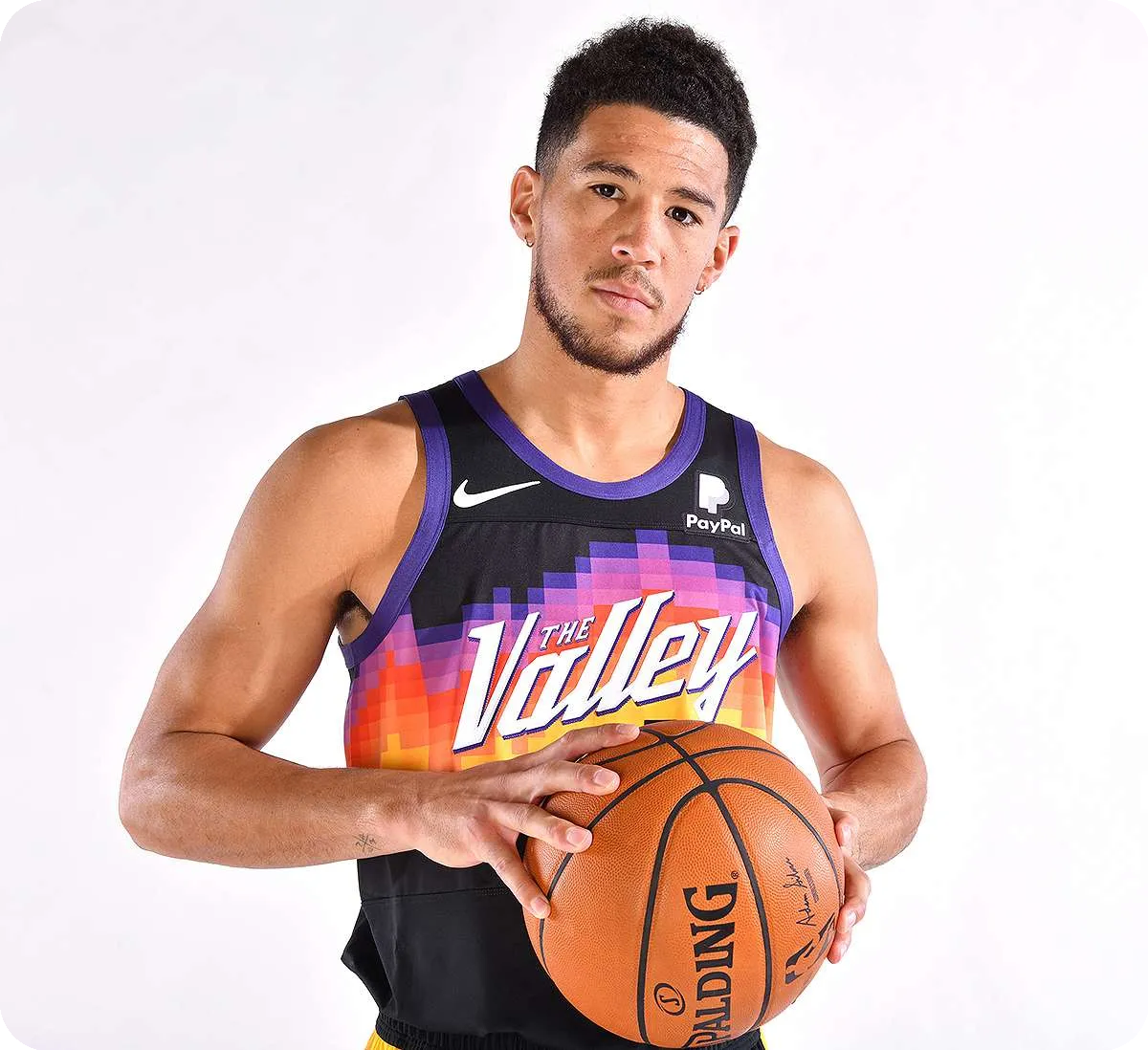
Role in the Suns’ Rise to Contention
The franchise went from bottom-five defense and lottery anonymity in 2017-18 to a Finals berth three summers later. Booker was the through-line:
- Bubble Catalyst (2020): An 8-0 rampage in Orlando, sealed by Booker’s fadeaway over Paul George, convinced front office brass they were closer than their 34-39 record suggested.
- Chris Paul Era (2020-23): Booker’s scoring held at 25-27 PPG, but his assist-to-turnover ratio jumped from 1.5 to 2.3 as Paul modeled advanced reads. The duo’s +13.2 net rating in fourth quarters (2021) ranked second only to the Curry-Durant Warriors.
- Big-Three Gamble (2024-present): When Phoenix traded depth for star power, Booker became both glue and ignition. Despite a 36-46 finish in 2024-25, the Suns still boasted the league’s 10-th-best offense (116.2 off-rtg) in large part because Booker kept their floor high when either co-star sat.
Team USA Contributions
Olympic Gold in 2020
Two days after his first NBA Finals heartbreak, Booker boarded a flight to Tokyo and reinvented himself on the fly. Accepting a bench role behind Jrue Holiday, he averaged 9.3 points, 3.2 rebounds and shot a team-best 92.9 % at the line in just 20.6 minutes. The semifinal against Australia became his global coming-out: a personal 8-0 burst swung momentum before halftime, igniting a 19-point comeback. Coach Gregg Popovich later cited Booker’s willingness to “star in a role” as vital to restoring Team USA’s defensive identity after a shaky group phase.
Playing Style in International Play
FIBA spacing (narrower lane, shorter three-point arc) rewards mid-range artisans, and Booker exploited that geometry. Against switching defenses he hunted elbow touches, converting 46.7 % of two-point attempts—second on the roster behind Durant. More telling was his defensive engagement: 1.5 steals per game, a by-product of hand-in-lane gambling that NBA coaches normally discourage but which thrives under FIBA’s lenient illegal-defense rules. Those reps sharpened instincts he brought back to Phoenix, where his steal rate ticked up from 1.0 to 1.4 the following season.
Impact on the Game and NBA Culture
Modern Shooting-Guard Blueprint
Booker’s statistical silhouette—**three-level scoring, secondary playmaking, positional flexibility—**has become the prototype scouts invoke when evaluating college wings. In 2015 his 13.8 PPG looked pedestrian; by Year 3 that number climbed above 24 without a dip in efficiency, prompting analytics departments to recalculate what “volume scorer” could mean in an era that prizes true-shooting over raw averages. Today prospects like Jaden Ivey and Keyonte George cite Booker’s footwork videos instead of Kobe or Jordan, a generational shift that underscores his relevance. The league has coined a term—“flat creator”—to describe guards who can begin a possession in either corner but finish it at the nail; Booker wrote that job description on the fly.
Comparisons to Kobe Bryant
The Kobe parallels began with the fadeaway footwork and gained traction when Booker tattooed “Be Legendary,” Bryant’s last text to him, on his forearm. Yet Booker has repeatedly asked pundits to “retire the comparison,” stressing that inspiration should not equal imitation. His objection isn’t false modesty; it’s strategic brand differentiation. Mamba Mentality celebrates obsessive will, but Booker’s twist is cognitive versatility—switching from flamethrower to facilitator without needing separate mindsets. Still, threads of Kobe’s influence remain clear: both hold 70-point games, both treat mid-range real estate as property, and both study defenders’ hips more than feet.
Influence on Young Fans and Future Players
Off the court, Booker is a lens through which Gen-Z consumes the NBA. His 5.6 million-plus Instagram following ranks third among players under 30 and spikes by 12-15 % after every playoff run SI. Unlike older stars who outsource social to agencies, Booker personally curates film-camera photo dumps of teammates and arena staff, making him relatable to high-schoolers who favor authenticity over studio polish. Nike amplified that aura with the Book 1 sneaker line—canvas sidewalls for lifestyle, Zoom Air for performance—creating a template for hybrid court-street footwear now emulated by brands chasing the “future classic” vibe.
Grass-roots influence runs deeper. In Arizona his “Starting Five” grants refurbish inner-city courts, while Moss Point clinics bring NBA-grade skill coaches to Gulf-Coast kids who rarely see big-time scouts. Local organizers credit a triple-digit spike in AAU registrations to Booker’s visibility, dubbing the effect “Booker Bounce.” In scouting circles, prospects born in 2008-10 mention Booker as their first basketball memory—evidence that influence can occur well before a jersey hangs in rafters.
Future Outlook and Predictions
Championship Potential
Phoenix’s immediate future hinges on two variables: health and cap gymnastics. Durant turns 37 in September 2025, Beal owns a no-trade clause, and the Suns sit $40 million above the second apron. Yet if the trio stays upright, their offensive ceiling rivals any contender—remember the 122.1 offensive rating posted in limited shared minutes this year. Front-office whispers suggest leveraging expiring deals (Jusuf Nurkic, Royce O’Neale) for switch-capable wings and low-usage rim protection. Should they land that balance, FiveThirtyEight’s early RAPTOR projections peg Phoenix at 52 wins and a 12 % title probability in 2025-26, highest in the Durant-Booker era.
Leadership and MVP Candidacy
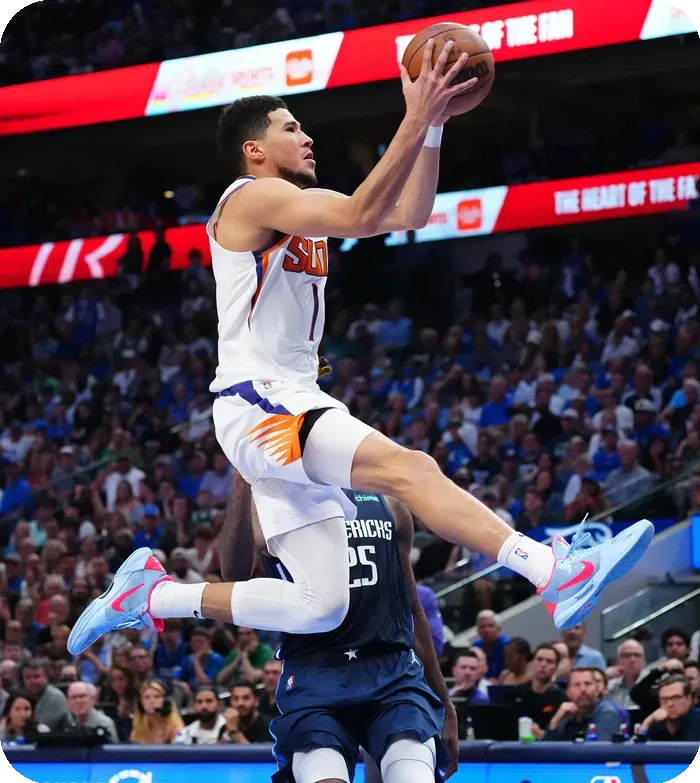
MVP arguments are won at the intersection of narrative and numbers. Booker already owns the numbers: career 59 % true-shooting during peak usage, top-five clutch scoring since 2021, and the league’s second-highest mid-range field-goal percentage over the past three seasons. Narrative, however, demands team success; Phoenix’s 36-46 finish kept him off most ballots this year despite gaudy personal stats. If the Suns return to 50-plus wins and Booker maintains the 25-7-4 baseline, voters may finally reward the blend of volume and efficiency rarely seen since Curry’s unanimous 2016 season.
Leadership metrics are harder to quantify, but Booker’s evolution is visible: he now fronts film sessions, manages mini-camps in Paradise Valley, and counsels younger teammates on NIL pitfalls. An assistant described him as “player-coach lite,” recounting how Booker compiled a 38-clip Dropbox on late-clock sideline out-of-bounds plays and shared it with the staff before a January road swing. That initiative, coupled with a decade of statistical excellence, positions him as the Western Conference’s heir apparent in the “face of the league” conversation once LeBron and Curry age out.